Construction Knowledge Bank
Document Management
Document Folders & Registers
Use Back button ← on your browser to return to previous menu


Use Back button ← on your browser to return to previous menu
The most important elements of a successful Construction Document Management strategy are organization, coordination and communication. Documenting the construction process is a complex and intricate task. It involves a large assortment of document types that are updated frequently, and need to be shared among a multitude of project stakeholders.
For that reason, best practice in construction document management requires organizing all your documents in one single database. This will ensure that documents are safe, accurately structured and promptly updated, and that all parties involved in the construction project share the same version of documents.
For insights into document control processes and industry best practices, see our guide Construction Document Management: Best Practices for Contractors.
Construction projects involve a substantial amount of documentation, which needs to be organized and managed efficiently. This section provides an overview of the different types of construction documents folders and registers commonly used in the industry. These tools are essential for maintaining accurate records, facilitating effective communication, and ensuring compliance throughout the construction process.
Project Information Folder: This folder serves as a central repository for all project-related information. It typically includes documents such as project briefs, contracts, permits, and insurance certificates. The project information folder enables easy access to critical information, ensuring that stakeholders have a comprehensive understanding of the project requirements.
Design Documents Folder: This folder contains all design-related documents, including architectural drawings, engineering calculations, and specifications. It helps ensure that all stakeholders have access to the latest design information, facilitating coordination and avoiding conflicts during construction.
Procurement Documents Folder: This folder encompasses all procurement-related documents, such as purchase orders, supplier agreements, and material specifications. It aids in tracking procurement progress, managing supplier relationships, and ensuring that the project receives the required materials and equipment on time.
Financial Documents Folder: This folder includes documents related to project budgeting, cost estimates, invoices, and payment records. It helps project managers and financial teams monitor project expenses, track payments, and maintain financial transparency.
Drawing Register: The drawing register is a comprehensive list of all construction drawings, indicating their version numbers, titles, and revisions. It ensures that all stakeholders are aware of the latest drawing versions and helps track any changes made throughout the project. The drawing register helps prevent errors resulting from outdated drawings and ensures consistency in construction activities.
Document Control Register: The document control register records all documents generated during the project, including correspondence, memos, and reports. It captures information such as document titles, numbers, authors, dates, and revisions. The document control register aids in tracking document flow, managing version control, and ensuring that all project participants have access to the latest information.
Submittal Register: The submittal register tracks the submission, review, and approval process for project-related documents, such as shop drawings, material samples, and product data. It provides an organized record of all submittals, their status, and any comments or actions taken. The submittal register helps maintain accountability, streamline communication with contractors and subcontractors, and ensures compliance with project requirements.

RFI (Request for Information) Register: The RFI register records all RFIs raised during the construction process, along with their responses and resolutions. It helps track the exchange of information, clarifications, and revisions requested by project participants. The RFI register aids in maintaining a clear audit trail, avoiding misunderstandings, and ensuring that project changes are properly documented.
Document management styles may differ, but most construction companies now use digital solutions such as construction management software. Whatever the approach, it is the project manager’s duty to keep all project stakeholders updated as construction progresses. Everyone affected by the frequent revisions to documents, from the internal team to the sub-contractors, architects, engineers and suppliers, must be advised of updated documents as soon as possible. Online construction management software offer many benefits, including:
Volume and Variety of Documents
Construction projects generate an immense volume and variety of documents. From project initiation to completion, documents such as contracts, bids, change orders/variations, submittals, progress reports, and as-built drawings need to be created, reviewed, revised, stored and shared. Managing these diverse documents can be overwhelming without a well-structured system in place.
Document Control and Version Control
Maintaining control over documents and ensuring that the latest versions are accessible to the relevant stakeholders is crucial. Construction projects often involve multiple parties, including owners/developers, contractors, sub-contractors, suppliers, architects and engineers, each generating and revising documents simultaneously. Implementing a robust document control system with clear version protocols is essential to prevent confusion and ensure that the most up-to-date information is being used by all relevant parties.
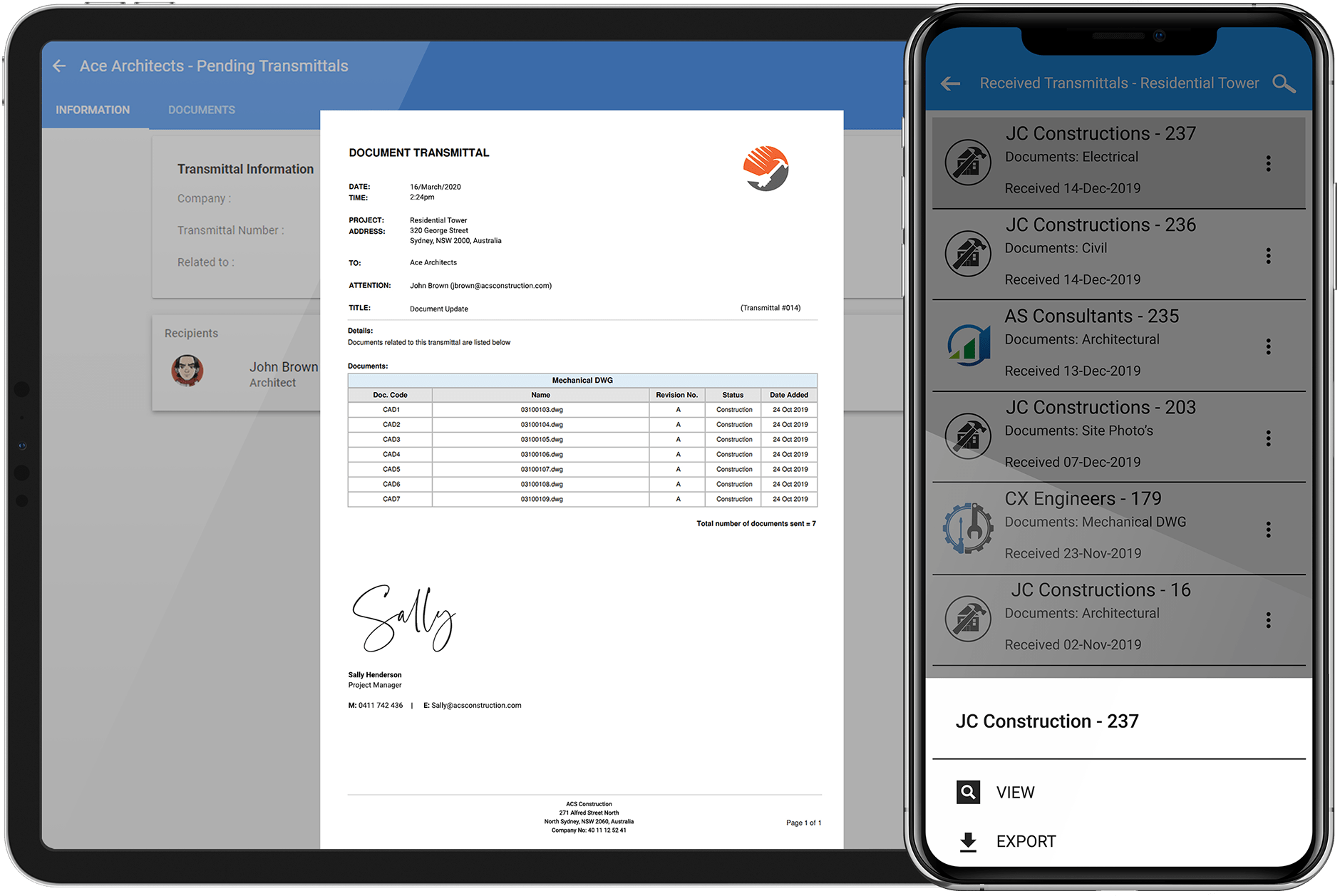
Accessibility and Collaboration
Ensuring that project documents are easily accessible to the appropriate stakeholders is a significant challenge. Construction projects often involve geographically dispersed teams, making it essential to have a centralized document management system that allows for secure and efficient collaboration. Cloud-based platforms and document sharing tools can facilitate real-time access, commenting, and revision tracking, promoting seamless collaboration among project participants.
Compliance and Regulatory Requirements
Construction projects must comply with various regulatory and legal requirements, which necessitates careful document management. Permits, licenses, safety reports, and environmental impact assessments are just a few examples of documents that need to be diligently managed to ensure compliance. Establishing a systematic approach to document tracking, retention, and retrieval is crucial for meeting legal obligations and avoiding potential penalties.
Document Retention and Archiving
Construction project documents often need to be retained for extended periods due to legal, contractual, or historical reasons. Managing the storage, retrieval, and archival of these documents can be challenging, especially when considering the potential for physical damage, loss, or technological obsolescence. Implementing a digital document management system and establishing proper archiving procedures can help ensure long-term accessibility and preservation.
Document Security and Confidentiality
Construction project documents often contain sensitive information, including financial data, proprietary designs, and confidential agreements. Protecting the security and confidentiality of these documents is paramount. Implementing strict access controls, encryption, and data backup measures can safeguard against unauthorized access, data breaches, or loss of critical information.
Project Document Management: How to Organize and Manage Project Information
https://onlinepmcourses.com/project-document-management-organize-and-manage-project-information/
Construction Document Management Best Practices
https://proest.com/construction/document-management/
Recommendations on File/Folder Naming Conventions
https://finance.uw.edu/recmgt/resources/file-folder-naming-conventions
How do you keep construction records accurate and comprehensive?
https://www.linkedin.com/advice/0/how-do-you-keep-construction-records-accurate
A beginner’s guide to construction document management
https://www.planradar.com/sa-en/benefits-of-construction-document-management-systems/
How to Organize Files, Folders and Documents For Maximum Productivity
https://www.asianefficiency.com/organization/organize-your-files-folders-documents/
How to organize files and folders
https://zapier.com/blog/organize-files-folders/
Document management system
https://en.wikipedia.org/wiki/Document_management_system
A Simple Guide to Document Control
https://www.qemsolutions.com/assets/library/QHelp-A-Simple-Guide-to-Document-Control_2.pdf

