Construction knowledge Bank
Project Management
Contractors Address Book
Use Back button ← on your browser to return to previous menu


Use Back button ← on your browser to return to previous menu
Managing the address book of construction contractors is a critical aspect of successful project management. The address book serves as a centralized database of all project stakeholders, including owners/developers, qualified subcontractors, suppliers, architects and engineers.
This enables construction professionals to efficiently collaborate with the right individuals or companies for specific project requirements, and to source and evaluate project requirements.
This section explores the importance of managing the address book of construction contractors and offers insights into effective strategies for maintaining and utilizing this valuable resource.
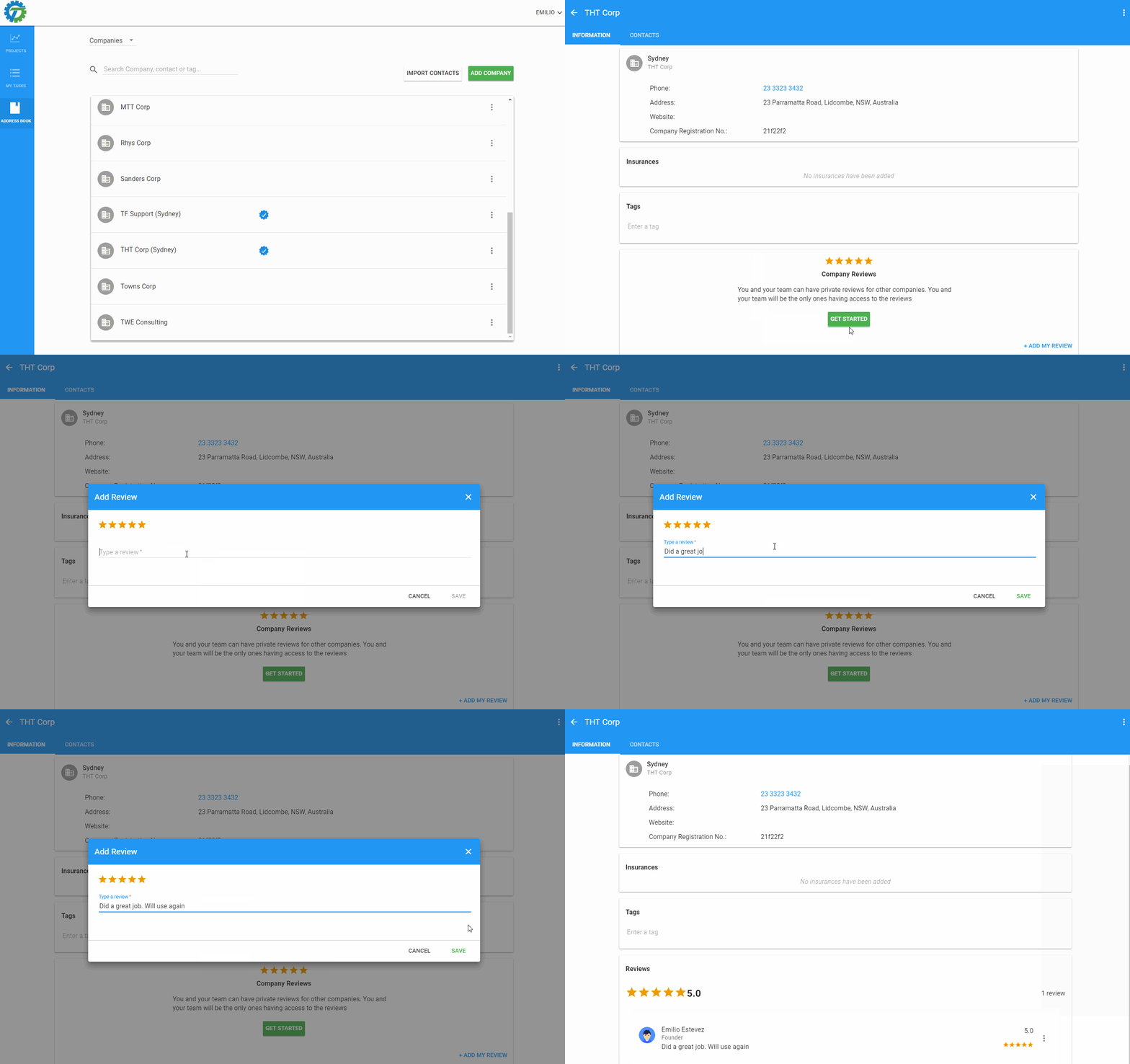
Managing the address book of construction contractors is a critical aspect of successful project management. An address book serves as a centralized database all project stakeholders, including owners/developers, qualified and reliable sub-contractors and suppliers, architects and engineers.
This section explores the importance of managing the address book of construction contractors and offers insights into benefits of effectively maintaining this valuable resource.
Streamlined Sourcing and Evaluation
A well-managed address book simplifies the process of sourcing for construction projects. By organizing contact details, specialties, and qualifications of various subcontractors and suppliers, construction professionals can quickly identify suitable candidates. Additionally, a well-maintained address book allows for the evaluation of sub-contractors and suppliers based on their experience, capabilities, and track record. This streamlined approach saves time and effort in the contractor selection process, ensuring that the most qualified individuals or companies are contacted for project opportunities.
Enhanced Collaboration and Networking
Maintaining a well-organized address book facilitates effective collaboration and networking with all project stakeholders. Construction professionals can easily connect with subcontractors who possess the expertise required for specific project tasks. This networking capability allows for the exchange of ideas, knowledge sharing, and the formation of strategic partnerships. By fostering collaboration, the address book becomes a platform for enhancing project outcomes, promoting innovation, and expanding professional networks.
Efficient Communication and Project Coordination
An organized address book enables efficient communication and project coordination with project stakeholders. Construction professionals can easily access contact details, including phone numbers, email addresses, and physical addresses. This accessibility ensures prompt and effective communication, enabling quick responses to queries, requests for information, and project updates. With a well-maintained address book, project coordination becomes seamless, ensuring that all involved parties are on the same page and working towards the project’s success.
Tracking Performance and Feedback
Managing an address book allows construction professionals to track the performance and feedback of subcontractors and suppliers. By maintaining records of previous collaborations, professionals can evaluate the quality of work, adherence to deadlines, and overall satisfaction levels. This information aids in making informed decisions when selecting for future projects. It also provides valuable insights into the strengths and weaknesses of different collaborators, enabling professionals to align project requirements with the most suitable candidates.
Updating and Expanding the Address Book
To ensure its effectiveness, the address book of construction contractors must be regularly updated and expanded. Construction professionals should actively seek new contacts, conduct thorough evaluations, and add them to the address book based on their qualifications and capabilities. Additionally, it is essential to update contact information, such as phone numbers and email addresses, to maintain accurate and current records. With a dynamic and up-to-date address book, construction professionals can stay ahead of industry trends and access a wider pool of resources for future projects.
Managing a construction contractor’s address book is crucial for the smooth operation of construction projects. An address book contains essential contact information for subcontractors, suppliers, vendors, and other stakeholders involved in the construction process. This section outlines strategies to effectively manage and maintain a construction contractor’s address book to ensure efficient communication and collaboration.
Develop a Structured System
– Categorization: Categorize contacts based on their roles and specialties, such as subcontractors, suppliers, architects, engineers, etc. This allows for easier access to specific contacts when needed during different project phases.
– Central Database: Establish a centralized database or software system to store and manage the address book. This ensures all contacts are easily accessible to authorized team members, eliminating duplicate or outdated entries.
Regular Updates and Verification
– Contact Information Accuracy: Regularly verify and update contact information to ensure accuracy. Contact details such as phone numbers, email addresses, physical addresses, and emergency contact information should be reviewed periodically.
– Contact Person Identification: Assign a specific contact person for each company or organization in the address book. This helps in streamlining communication channels and avoids confusion or miscommunication.
Standardize Communication Channels
– Preferred Methods: Determine the preferred communication methods for each contact. This can include email, phone, video conferencing, or project management software. Standardizing communication channels ensures efficient and effective communication.
– Emergency Contacts: Identify emergency contacts and ensure they are readily accessible in case of urgent situations or unforeseen circumstances.
Implement Collaboration Tools
– Project Management Software: Utilize project management software that allows for contact management, communication, and collaboration. These tools often include features like document sharing, task assignment, and progress tracking, enhancing team collaboration and streamlining communication with contractors.
– Cloud-Based Platforms: Store the address book and related documents on cloud-based platforms to enable real-time access for all team members. This ensures that the most up-to-date contact information is available to everyone involved in the project.
Establish Strong Relationships
– Regular Communication: Maintain regular contact with contractors to build strong relationships. Regular communication helps foster trust, improves collaboration, and ensures a smooth flow of information.
– Networking: Attend industry events, conferences, and seminars to expand your contractor network. Building relationships with new contractors can enhance your address book and offer a wider pool of resources for future projects.
Security and Confidentiality
– Data Protection: Ensure that the address book and associated data are protected through appropriate security measures. This includes password protection, limiting access to authorized personnel, and regular data backups.
– Confidentiality Agreements: If necessary, implement confidentiality agreements to protect sensitive contact information and prevent unauthorized use or disclosure.
Regular Auditing and Clean-up
Perform regular audits to identify and remove outdated or duplicate contacts. This helps maintain a clean and organized address book and ensures accurate and up-to-date information.

