Back Charge
Use Back button ← on your browser to return to previous menu


Use Back button ← on your browser to return to previous menu
What is a construction Back Charge?
A back charge is a method to collect unexpected costs from the party who caused such costs to occur, usually a sub-contractor or a supplier. It provides the opportunity to put the party who incurred the costs in the same position in which they would have been if the construction contract been properly performed by all parties. Most construction contracts have provisions for back charges, also commonly called “a right to set off“.
Back charges can be used in different scenarios:
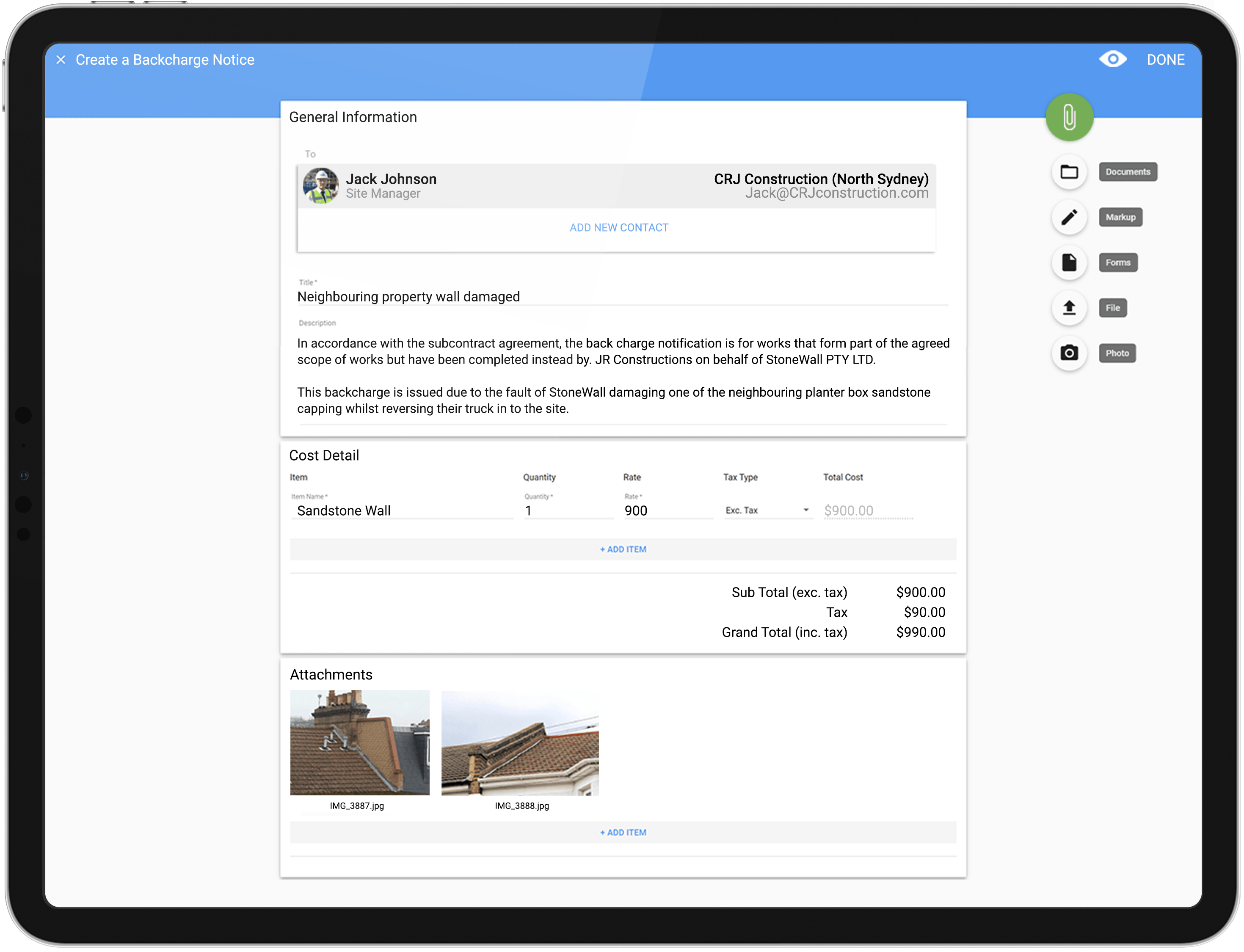
What is included in the Back Charge clauses in the contract?
There are no laws that govern how back charges work. A construction back charge is usually contained in the construction contract or sub-contract. It is important for Back Charge terms in the contract to be drafted clearly to ensure that disputes are avoided or resolved quickly without the need for costly litigation. Back charge terms can vary greatly from contract to contract but they generally cover a number of matters, including:
Efficient Management of Construction Back Charge
In the construction industry, back charges are a common occurrence when a contractor or sub-contractor fails to meet their contractual obligations or causes additional costs to the project. The efficient management of construction back charges is crucial to ensure fair and timely resolution of financial disputes and to maintain project profitability. This section explores the importance of effective back charge management and outlines some strategies that can be employed to streamline the process.
To facilitate efficient back charge management, clear and well-defined contractual agreements should be established from the beginning of a project. Contracts should clearly outline the responsibilities and obligations of each party involved, including the circumstances under which back charges may be incurred. By having a thorough understanding of the contract terms, contractors and sub-contractors can minimize the chances of disputes and potential back charges.
Proper documentation and record keeping are essential for effective back charge management. Contractors should maintain a comprehensive record of all project activities, including daily logs, change orders, and communication records. These documents serve as evidence in case a back charge claim needs to be made or disputed. By maintaining accurate and organized records, parties involved can easily refer to specific incidents or changes that led to the back charge, facilitating a fair and efficient resolution process.
Timely identification and notification of potential back charges are crucial for effective management. Contractors and sub-contractors should promptly identify any deviations from contractual obligations or instances where additional costs are incurred due to the actions or inactions of others. Once identified, the responsible party should be promptly notified, allowing them the opportunity to rectify the issue and prevent the back charge from being imposed. Timely communication helps avoid misunderstandings and allows for prompt resolution of disputes.
When back charges are deemed necessary, it is important to ensure their fair assessment and documentation. The responsible party should provide a detailed breakdown of the costs incurred, clearly outlining how they are linked to the breach of contract or additional work caused by others. The documentation should be transparent, accurate, and supported by relevant evidence. This helps prevent disputes and facilitates efficient resolution by providing a clear understanding of the circumstances surrounding the back charge.
Efficient back charge management requires timely resolution and effective communication between all parties involved. Once a back charge is assessed and documented, it should be promptly communicated to the responsible party, providing them with an opportunity to respond or dispute the charge. Clear communication channels and regular progress meetings should be established to address any concerns or disagreements. Timely resolution helps prevent delays in project completion and ensures that financial disputes do not escalate, ultimately impacting project profitability.
In cases where back charges are disputed, having effective dispute resolution mechanisms in place is essential. Construction contracts should include provisions for alternative dispute resolution methods such as mediation or arbitration. These mechanisms provide a fair and impartial forum for parties to present their arguments and seek resolution without resorting to costly and time-consuming litigation. By having agreed-upon dispute resolution processes, back charge disputes can be resolved more efficiently, minimizing project disruptions and preserving relationships between project stakeholders.
Articles and References
Back Charges in Construction Contract: Case Study of Airport Project
https://ascelibrary.org/doi/abs/10.1061/%28ASCE%29LA.1943-4170.0000392
Construction Back Charges: How Can You Avoid Them?
https://procrewschedule.com/construction-back-charges-how-can-you-avoid-them/
Refresher On Extras And Back Charges: Impact Painting Ltd v Man-Shield (Alta) Construction Inc
Back charges in construction practice
https://www.ibanet.org/article/0f7095e7-35ac-40d1-9150-22fc36034c2b
Documenting Backcharges on Construction Projects
https://www.natlawreview.com/article/documenting-backcharges-construction-projects
Rise and Fall Clauses in Construction Contracts
https://vincentyoung.com.au/rise-and-fall-clauses-in-construction-contracts/
What Are “Back Charges” in Construction?
https://www.levelset.com/blog/back-charges-construction/
Claiming Retention Money after Construction
https://www.contractsspecialist.com.au/articles/construction-retention/
Security of payment
Contra charges

Critical Path Method (CPM) is a defining resource for the construction industry. First developed in the late 1950s, the critical path method has been utilised in a variety of project development projects including engineering, aerospace and plant maintenance. CPM has rapidly become an essential staple for construction projects today, but many business owners are intimidated from what is perceived as a complex process.

The value of As Built drawings is often underrated, especially their importance for the efficient management of the project after construction has been completed. This article takes a brief look at As Built drawings; what they are, how they are created and why they are important.

The customary monthly clients meeting is a time when you have the chance to give your clients progress updates about their project and provide them with a monthly report. Your monthly report says a lot about your professionalism and should not be rushed or overlooked. It is an ideal way to instill confidence in your clients about your company’s ability to communicate, and to demonstrate that you have a solid understanding of their project and their priorities.


